
Quality Aluminium. Consistent Supply. On-Time Delivery.
Quality Aluminium. Consistent Supply. On-Time Delivery.
Rajendra Tubinox is a trusted stainless steel tubes manufacturer in India, delivering high-quality tubing solutions for industrial, structural, and precision applications across India and global export markets. With advanced manufacturing capabilities and strict quality control, we cater to procurement managers, EPC contractors, OEMs, and industrial buyers looking for reliable and certified stainless steel tubes.
Our stainless steel tubes are available in seamless, ERW, and TIG welded forms, ensuring flexibility to meet diverse industrial requirements. Designed for high performance, corrosion resistance, and dimensional accuracy, our tubes are widely used in industries such as oil & gas, chemical processing, pharmaceuticals, food processing, and engineering applications.
With ready stock, custom manufacturing options, and global supply capability, Rajendra Tubinox ensures timely delivery, competitive pricing, and consistent quality.
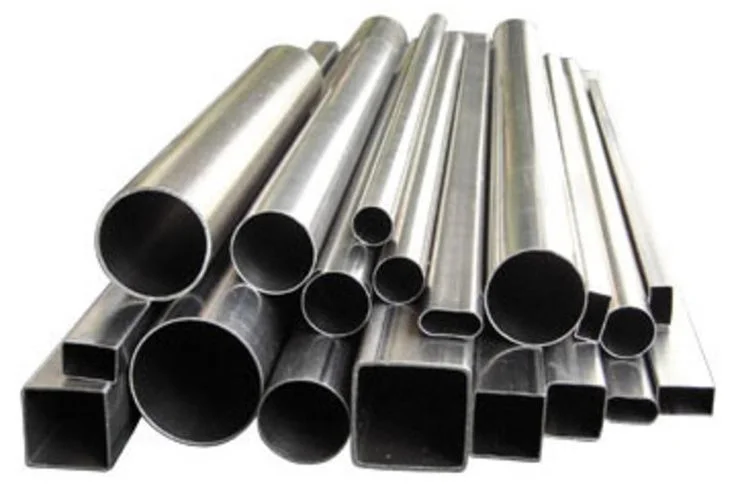
Stainless steel tubes are precision-engineered hollow cylindrical products used in a wide range of industrial and structural applications. They are manufactured using different processes such as seamless (cold drawn or hot finished), ERW (Electric Resistance Welding), and TIG welding, depending on the required strength, finish, and application.
Compared to pipes, stainless steel tubes offer tighter dimensional tolerances, better surface finish, and higher precision, making them ideal for applications where accuracy and aesthetics are important.
At Rajendra Tubinox, our stainless steel tubes are designed to deliver:
Our tubes comply with international standards such as ASTM and are suitable for both industrial processing and high-precision applications.
| Product Type | Stainless Steel Tubes |
|---|---|
| Material Grades | SS 304/304L, 310, 310S, 316/316L, 317L, 904L, 321, 347, 347H |
| Manufacturing Process | Seamless / ERW / TIG Welded |
| Outer Diameter | 6 mm to 219 mm (Custom Sizes Available) |
| Wall Thickness | 0.5 mm to 12 mm |
| Length | Up to 6 meters or Custom Cut Lengths |
| Surface Finish | Annealed & Pickled, Bright Annealed, Polished, Mirror Finish |
| Standards | ASTM A213, ASTM A269, ASTM A554, ASTM A789 |
We offer stainless steel tubes in a wide range of sizes to suit precision and industrial applications.
| Outer Diameter (OD) | Wall Thickness | Type |
|---|---|---|
| 6 mm – 25 mm | 0.5 mm – 2 mm | Precision / Instrumentation Tubes |
| 25 mm – 76 mm | 1 mm – 5 mm | Industrial Tubes |
| 76 mm – 168 mm | 2 mm – 10 mm | Structural Tubes |
| 168 mm – 219 mm | 3 mm – 12 mm | Heavy Duty Tubes |
Custom sizes, tolerances, and finishes are available based on project requirements.
| Grade | Tensile Strength (MPa) | Yield Strength (MPa) | Elongation (%) |
|---|---|---|---|
| 304 | ≥ 515 | ≥ 205 | ≥ 40 |
| 304L | ≥ 485 | ≥ 170 | ≥ 40 |
| 310S | ≥ 520 | ≥ 205 | ≥ 40 |
| 316 | ≥ 515 | ≥ 205 | ≥ 40 |
| 316L | ≥ 485 | ≥ 170 | ≥ 40 |
| 317L | ≥ 515 | ≥ 205 | ≥ 35 |
| 904L | ≥ 490 | ≥ 220 | ≥ 35 |
| 321 | ≥ 515 | ≥ 205 | ≥ 40 |
| 347 | ≥ 515 | ≥ 205 | ≥ 40 |
| Grade | C% | Mn% | Si% | Cr% | Ni% | Mo% | Others |
|---|---|---|---|---|---|---|---|
| 304 | 0.08 | 2.00 | 0.75 | 18–20 | 8–10.5 | - | - |
| 304L | 0.03 | 2.00 | 0.75 | 18–20 | 8–12 | - | - |
| 310S | 0.08 | 2.00 | 1.50 | 24–26 | 19–22 | - | - |
| 316 | 0.08 | 2.00 | 0.75 | 16–18 | 10–14 | 2–3 | - |
| 316L | 0.03 | 2.00 | 0.75 | 16–18 | 10–14 | 2–3 | - |
| 317L | 0.03 | 2.00 | 0.75 | 18–20 | 11–15 | 3–4 | - |
| 904L | 0.02 | 2.00 | 1.00 | 19–23 | 23–28 | 4–5 | Cu: 1–2 |
| 321 | 0.08 | 2.00 | 0.75 | 17–19 | 9–12 | - | Ti Stabilized |
| 347 | 0.08 | 2.00 | 0.75 | 17–19 | 9–13 | - | Nb Stabilized |
Stainless steel tubes are widely used in industries that require precision, corrosion resistance, and consistent dimensional accuracy.
Conclusion: Stainless steel tubes offer a reliable combination of performance, versatility, and long service life.
Rajendra Tubinox supplies stainless steel tubes to a wide range of industries that demand consistent quality and reliable performance. Our tubes are widely used in oil & gas, chemical processing, and power generation sectors where durability and resistance to harsh environments are essential. We also serve industries such as pharmaceuticals, food processing, and construction, where stainless steel tubes are required for hygienic applications, structural strength, and precision engineering. Additionally, automotive and water treatment sectors rely on our products for their reliability and long-term performance.
Looking for a reliable stainless steel tubes manufacturer in India? Rajendra Tubinox offers high-quality tubes with ready stock availability and competitive pricing for industrial applications.
Share your requirement details such as grade, size, thickness, and quantity, and our team will provide a quick quotation along with technical specifications and delivery timeline.
Our team is ready to support your requirement with accurate pricing and dependable supply.