
Quality Aluminium. Consistent Supply. On-Time Delivery.
Quality Aluminium. Consistent Supply. On-Time Delivery.
In heat exchanger systems where leakage prevention and tube integrity are critical, the heat exchanger ferrule plays a vital role in ensuring reliable sealing and long-term performance. Rajendra Tubinox is a trusted name among heat exchanger ferrule manufacturers in India, offering precision-engineered solutions designed for demanding industrial applications.
Our heat exchanger ferrule products are manufactured using high-quality materials and advanced machining techniques to ensure perfect fitment, durability, and resistance to corrosion. Designed for critical sealing and reinforcement, each heat exchanger ferrule is built to perform efficiently under high pressure, temperature, and aggressive operating conditions.
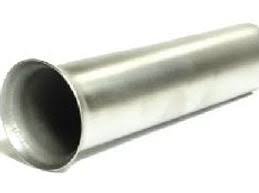
A heat exchanger ferrule is a specially designed component used in shell and tube heat exchangers to reinforce tube-to-tubesheet joints and prevent leakage. The heat exchanger ferrule acts as a protective insert, improving the strength and sealing efficiency of the connection while extending the overall life of the system.
Manufactured using materials such as stainless steel, duplex, super duplex, and nickel alloys, each heat exchanger ferrule is selected based on application requirements and environmental conditions. The use of high-performance materials ensures that the heat exchanger ferrule performs effectively even in corrosive and high-temperature environments.
At Rajendra Tubinox, every heat exchanger ferrule is produced with strict dimensional accuracy and quality control, ensuring:
Our expertise allows us to deliver customized heat exchanger ferrule solutions that meet international standards and project-specific requirements.
| Product Type | Heat Exchanger Ferrule |
|---|---|
| Material Grades | Stainless Steel (304/316), Duplex, Super Duplex, Nickel Alloys, Inconel, Monel |
| Application | Tube-to-Tubesheet Reinforcement & Sealing |
| Size Range | As per Tube OD & Custom Specifications |
| Wall Thickness | Standard & Heavy Duty Options Available |
| Design Types | Plain Ferrule / Flanged Ferrule / Tapered Ferrule |
| Surface Finish | Machined / Polished / As Per Customer Requirement |
| Standards | ASME / TEMA / Customer Drawings |
The heat exchanger ferrule is manufactured based on tube dimensions and application requirements:
| Tube OD | Ferrule Type | Thickness |
|---|---|---|
| As per tube size | Plain Ferrule | Standard |
| As per tube size | Flanged Ferrule | Heavy Duty |
| As per tube size | Tapered Ferrule | Custom |
Each heat exchanger ferrule is available in customized sizes to ensure perfect compatibility with heat exchanger systems.
We offer a wide range of heat exchanger ferrule inserts and related grades:
The heat exchanger ferrule is widely used in shell and tube heat exchangers where maintaining leak-proof connections is critical. It is primarily installed at the tube-to-tubesheet junction to enhance sealing and prevent fluid leakage under pressure.
In industries such as power generation, petrochemicals, and refineries, the heat exchanger ferrule plays an essential role in ensuring safe and efficient operation. These components are also used in chemical processing plants, marine systems, and HVAC units where heat exchangers are exposed to harsh environments.
Conclusion: The heat exchanger ferrule is an essential component for ensuring efficient and leak-free operation of heat exchanger systems.
Rajendra Tubinox is a leading heat exchanger ferrule manufacturers in India, known for delivering precision-engineered components that meet international quality standards. Our experience in manufacturing high-performance components ensures that every heat exchanger ferrule meets strict industry requirements.
We focus on accuracy, consistency, and customization, allowing us to supply heat exchanger ferrule solutions tailored to specific project needs. Our advanced manufacturing processes ensure perfect fitment and long-term reliability in critical applications.
With strong quality control, adherence to ASME and TEMA standards, and support for third-party inspections, we ensure complete transparency and trust. Our commitment to timely delivery and customer satisfaction makes us a reliable partner for industrial buyers.
Conclusion: Our heat exchanger ferrule solutions are trusted across industries for their reliability and long service life.
A heat exchanger ferrule is a component used to reinforce and seal the connection between tubes and tubesheets in heat exchangers.
Common materials include stainless steel, duplex, super duplex, nickel alloys, Inconel, and Monel.
The heat exchanger ferrule improves sealing, prevents leakage, and enhances the strength of tube joints.
It is used in shell and tube heat exchangers across industries such as power plants, refineries, and chemical processing.
Yes, we manufacture heat exchanger ferrule as per customer drawings and specifications.
Yes, depending on the material grade, the heat exchanger ferrule offers excellent corrosion resistance.
Yes, all heat exchanger ferrule products are supplied with Mill Test Certificates and inspection support.
If you are looking for a dependable supplier of heat exchanger ferrule for your project, Rajendra Tubinox offers precision-engineered components designed for performance and reliability.
Share your requirement details such as material grade, size, design type, and quantity, and our team will provide a detailed quotation along with technical specifications and delivery timelines.
Our team is ready to support your requirement with accurate solutions and consistent supply.