
SS 304 / 304L Tube Ferrule Inserts
SS 304 / 304L Tube Ferrule Inserts are precision-machined components designed
to provide secure tube-to-tubesheet reinforcement and enhanced sealing in
heat exchangers, condensers, and pressure vessels. Manufactured from
austenitic stainless steel grades 304 and low-carbon 304L, these inserts
offer excellent corrosion resistance, durability, and mechanical strength
in moderate to severe operating conditions.
Designed for dimensional accuracy and tight tolerances, SS 304/304L Tube
Ferrule Inserts help prevent tube end distortion, leakage, and vibration
damage. The low carbon content of 304L minimizes carbide precipitation
during welding, reducing the risk of intergranular corrosion and ensuring
long-term reliability in welded assemblies.
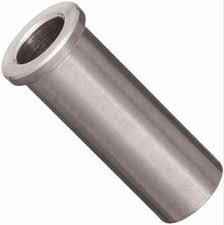
Specifications of SS 304 / 304L Tube Ferrule Inserts
| Product Type |
SS 304 / 304L Tube Ferrule Inserts |
| Material Grades |
Stainless Steel 304 / 304L |
| Application |
Tube-to-Tubesheet Reinforcement & Sealing |
| Size Range |
As per Tube OD & Custom Specifications |
| Design Types |
Straight Inserts / Tapered Inserts / Flanged Inserts (As Required) |
| Surface Finish |
Machined / Polished / Passivated |
| Manufacturing Process |
Precision CNC Machining |
| Standards |
ASTM A240 / ASME SA240 (Material) – As Applicable |
Key Benefits
- Excellent Corrosion Resistance: Suitable for water, mild chemicals, and atmospheric
exposure.
- Good Weldability: 304L grade reduces risk of intergranular corrosion after welding.
- Enhanced Sealing Performance: Minimizes leakage at tube joints.
- Vibration Protection: Reduces tube wear caused by operational movement.
- High Strength & Durability: Maintains integrity under moderate pressure and
temperature.
- Dimensional Accuracy: Precision-machined for tight tolerances and proper fit.
- Cost-Effective Solution: Reliable performance for standard industrial applications.
Installation Guidelines for SS 304 / 304L Tube Ferrule Inserts
Proper installation ensures leak-proof performance and extended service life.
- Material Verification: Confirm SS 304 or 304L grade before installation.
- Dimensional Check: Ensure compatibility with tube OD and tubesheet bore.
- Clean Surface Preparation: Remove debris, oil, and scale from installation area.
- Accurate Alignment: Install inserts carefully to avoid misalignment.
- Pressure Testing: Conduct hydrostatic or pneumatic testing after installation.
Maintenance Tips
Regular inspection and cleaning help maintain long-term performance.
- Routine Inspection: Check for corrosion, scaling, or mechanical wear.
- Cleaning: Remove deposits to prevent crevice corrosion.
- Leak Monitoring: Inspect tube joints during maintenance shutdowns.
- Passivation (If Required): Restore protective chromium oxide layer when necessary.
- Periodic NDT Testing: Perform inspections in critical service conditions.
Industries Using SS 304 / 304L Tube Ferrule Inserts
- Heat Exchanger Manufacturing: Shell & tube exchangers.
- Power Generation Plants: Condensers and cooling systems.
- Chemical Processing Industry: Mild chemical handling systems.
- Water Treatment Plants: Desalination and filtration systems.
- Food & Beverage Industry: Hygienic processing equipment.
- HVAC Systems: Industrial cooling and heating units.
Quality Assurance
SS 304 / 304L Tube Ferrule Inserts undergo strict quality checks to ensure
compliance with material and dimensional standards.
- Chemical Composition Testing: Verification of chromium and nickel content.
- Mechanical Testing: Hardness and strength verification.
- Dimensional Inspection: OD, ID, length, and tolerance checks.
- Surface Finish Inspection: Ensures smooth, defect-free finish.
- Documentation: Mill Test Certificates (MTC) and inspection reports provided.
Conclusion
SS 304 / 304L Tube Ferrule Inserts provide reliable sealing, structural
reinforcement, and corrosion resistance for heat exchanger and industrial
applications. With precise machining and high-quality stainless steel
construction, they ensure long-term performance and operational safety
in a wide range of processing environments.