
Quality Aluminium. Consistent Supply. On-Time Delivery.
Quality Aluminium. Consistent Supply. On-Time Delivery.
In industries where strength, heat resistance, and durability are critical, alloy steel tubes play a vital role in ensuring safe and efficient operations. Rajendra Tubinox is a trusted alloy steel tubes manufacturer in India, offering high-performance tubes designed to withstand extreme pressure and temperature conditions.
Engineered for demanding industrial environments, our alloy steel tubes are widely used in power plants, refineries, and chemical processing units. With advanced manufacturing processes and strict quality control, we deliver tubes that ensure reliability, long service life, and consistent performance across critical applications.
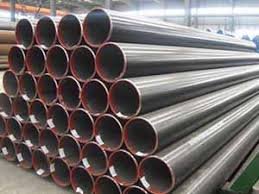
Alloy steel tubes are manufactured by adding elements such as chromium, molybdenum, and vanadium to improve mechanical strength, corrosion resistance, and heat tolerance. These tubes are specifically designed for applications involving high pressure, elevated temperatures, and aggressive operating conditions.
Manufactured through hot finished, cold drawn seamless, or ERW processes, alloy steel tubes offer superior structural integrity and uniform properties. Grades such as P11, P22, and P91 are widely used in industries where thermal stability and creep resistance are essential.
At Rajendra Tubinox, our alloy steel tubes are produced to meet international standards, ensuring:
With extensive inventory and customization options, we support both standard and project-based requirements.
| Product Type | Alloy Steel Seamless / ERW Tubes |
|---|---|
| Material Grades | P5, P9, P11, P12, P22, P91, T11, T22 (As Applicable) |
| Manufacturing Process | Hot Finished / Cold Drawn Seamless / ERW |
| Size Range | 1/2" NB to 24" NB (Custom Sizes Available) |
| Wall Thickness | Schedule 10 to Schedule XXS (Custom Thickness Available) |
| Length | Single Random / Double Random / Custom Cut Lengths |
| Surface Finish | Black Finish / Pickled & Oiled / Shot Blasted |
| End Types | Plain End (PE), Beveled End (BE), Threaded (On Request) |
| Standards | ASTM A335, ASTM A213, ASTM A519, ASME SA335 |
We supply
alloy steel tubes
in a wide range of sizes suitable for industrial applications:| Nominal Size | Outer Diameter Range | Thickness |
|---|---|---|
| 1/2” – 2” | 21.3 mm – 60.3 mm | Sch 10 – Sch 40 |
| 2.5” – 6” | 73 mm – 168.3 mm | Sch 40 – Sch 160 |
| 8” – 24” | 219 mm – 610 mm | Up to XXS |
Custom sizes and thicknesses are available based on project requirements.
We supply a wide range of alloy steel tubes and related grades:
Alloy steel tubes are widely used in industries that require high strength and resistance to extreme operating conditions. These tubes are specifically designed to perform under high pressure and temperature, making them suitable for critical industrial systems.
They are commonly used in power generation plants, boilers, and heat exchangers where materials must withstand continuous thermal stress. In addition, industries such as oil & gas and petrochemicals rely on
alloy steel tubes
for handling high-temperature fluids and maintaining system integrity under demanding conditions.Conclusion: Alloy steel tubes are essential for industries where performance, safety, and durability are critical, especially in high-temperature and high-pressure environments.
Rajendra Tubinox is a trusted manufacturer of alloy steel tubes, known for delivering high-performance products that meet stringent industrial requirements. Our manufacturing processes are designed to ensure precision, consistency, and compliance with international standards.
We maintain a strong inventory and efficient production system, enabling us to meet both bulk and urgent requirements without delays. Our ability to supply a wide range of grades and sizes ensures flexibility for various industrial applications.
With strict quality control, advanced testing, and support for third-party inspections, we ensure complete transparency and reliability. Our commitment to timely delivery and customer satisfaction makes us a dependable partner for industrial buyers.
Rajendra Tubinox supplies alloy steel tubes to a wide range of industries that require high strength, heat resistance, and reliable performance under demanding conditions. Our products are widely used in power generation, oil & gas, and petrochemical sectors where materials must withstand high temperature and pressure.
We also cater to industries such as chemical processing, refineries, and heavy engineering, where durability and long service life are critical. In addition, infrastructure and industrial projects rely on our alloy steel tubes for their structural integrity and consistent performance.
Alloy steel tubes are steel tubes made with additional alloying elements such as chromium and molybdenum to enhance strength, heat resistance, and durability. They are widely used in high-temperature and high-pressure applications.
Common grades include P11, P22, P91, T11, and T22, which are widely used in power plants, refineries, and industrial applications requiring thermal stability.
They are used in boilers, heat exchangers, power plants, oil & gas pipelines, and chemical processing industries where high performance is required.
They offer high strength, resistance to heat and pressure, long service life, and reliable performance in extreme operating conditions.
Yes, Rajendra Tubinox offers customized sizes, thicknesses, and lengths based on project requirements.
Our products comply with ASTM A335, ASTM A213, ASTM A519, and ASME SA335 standards.
Yes, alloy steel tubes are specifically designed for high-temperature and high-pressure environments such as boilers and heat exchangers.
Yes, all products are supplied with Mill Test Certificates (MTC), and third-party inspections can be arranged if required.
Looking for a reliable alloy steel tubes manufacturer in India? Rajendra Tubinox offers high-quality alloy steel tubes with ready stock availability, competitive pricing, and dependable delivery timelines.
Share your requirement details such as grade, size, thickness, and quantity, and our team will provide a quick quotation along with technical specifications and delivery schedule.
Our team is ready to support your requirement with accurate pricing and consistent supply.